Excellis builds the Business Operating System that runs your company. The Forge builds it. CUE powers it. CUE Intelligence drives it. Your people command it.
610.933.7680
info@excelliscorp.com
King of Prussia, PA
Data to production
Delivered in year one
Unified on one platform
In May 2024, Avenir Energy acquired a propane and distillate fuel business carved out of Parkland Corporation. What it received was not a business in the conventional sense - it received five years of data. No ERP. No CRM. No SAP, no Oracle, no ADDS. No screenshots of legacy screens. No process documentation. No laptops. Not a single application. Just data, and 58,000 active customers across three Canadian regions who still expected fuel to arrive on schedule.
On December 1, 2024, Avenir went live on CUE. Twelve months later, the business had delivered over 360 million liters of fuel on a system that had not existed when the deal closed.
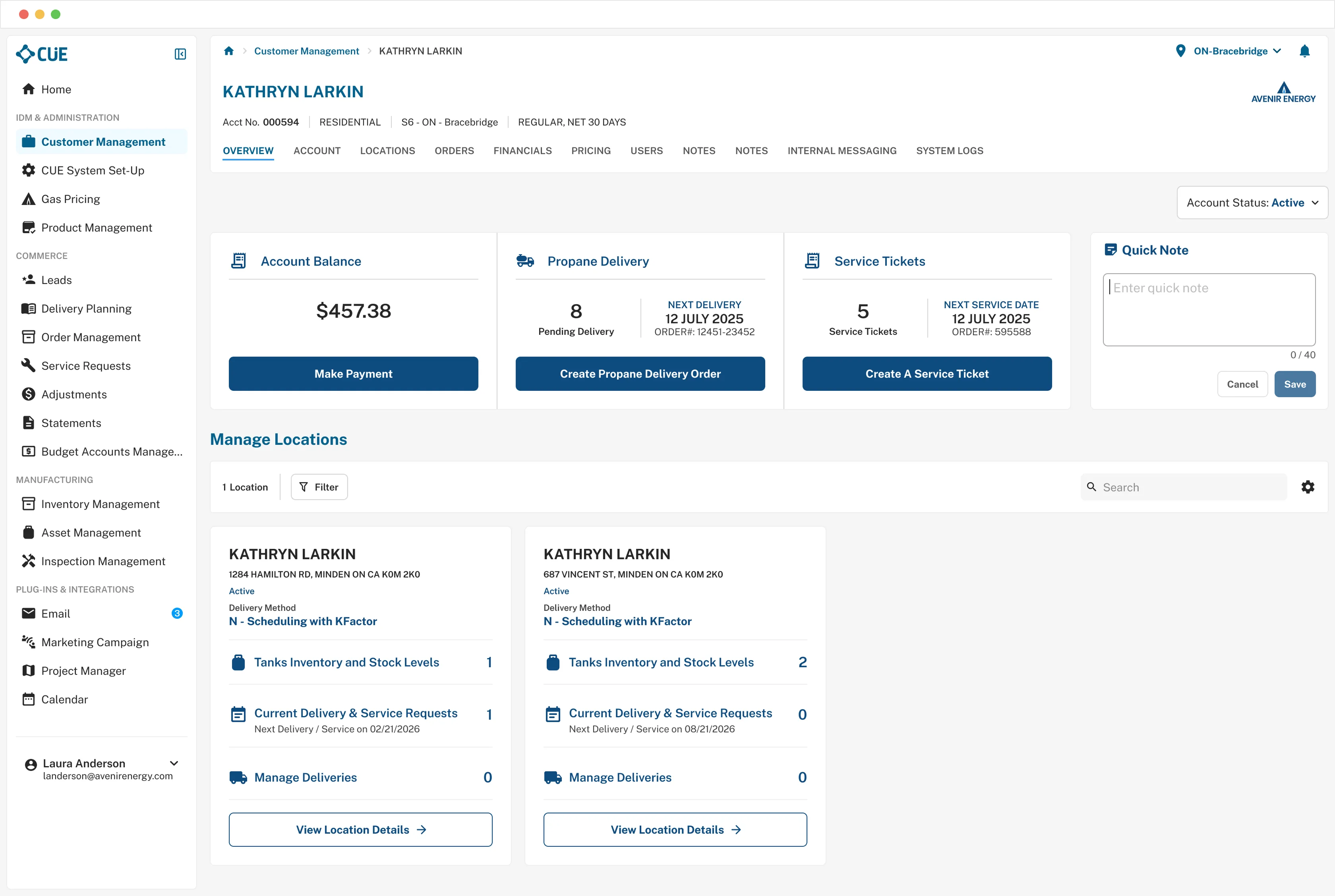
CUE - Avenir Customer Management Overview
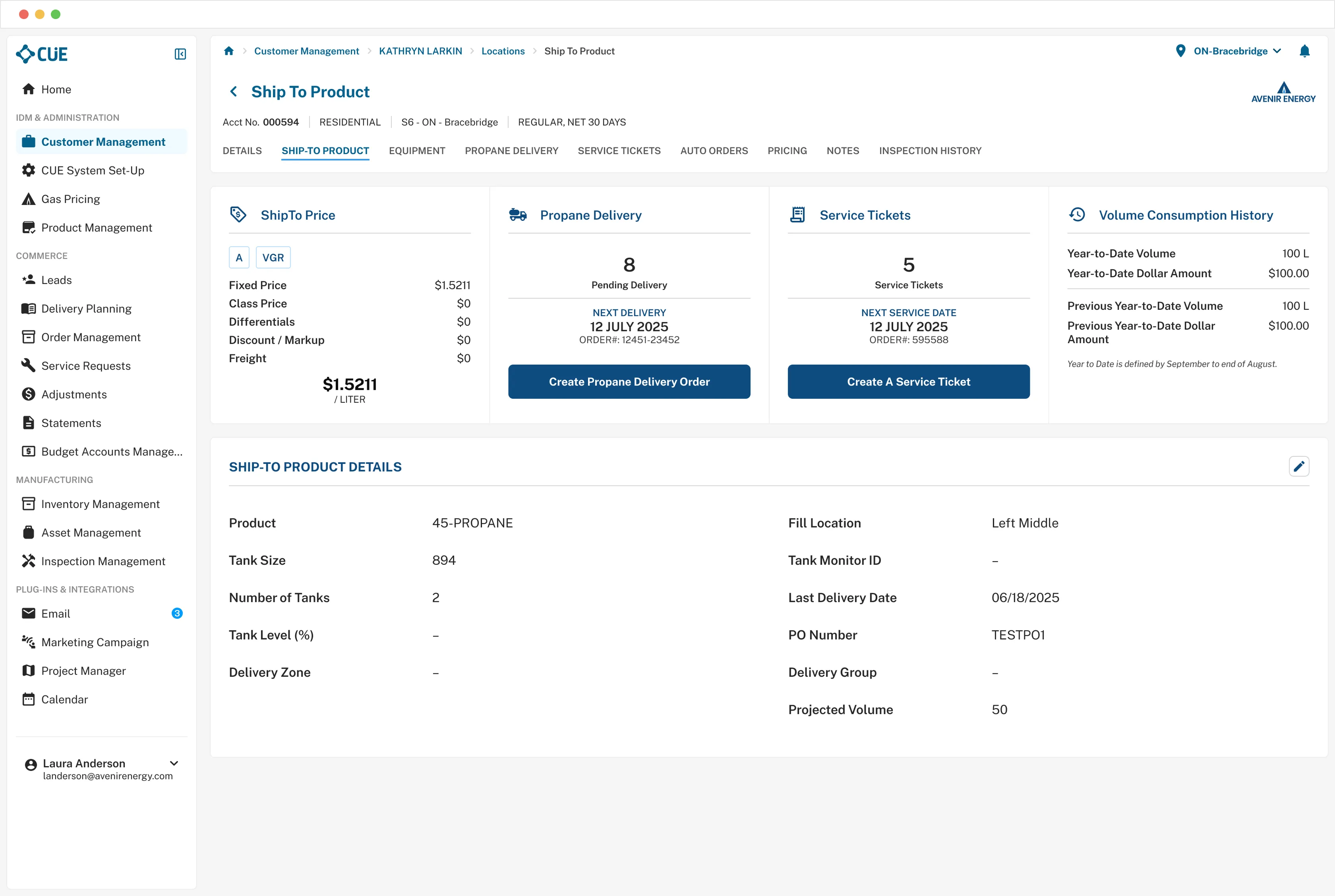
CUE - Avenir Product Details
⬥
⬥
⬥
⬥
⬥
CEO - AVENIR ENERGY
Most ERP projects begin with a system to replace. Avenir didn’t have that advantage. The carveout agreement conveyed the customer book, the delivery obligations, the regulatory footprint, and five years of transaction history - and nothing else. No Oracle. No SAP. No ADDS. No dedicated propane platform. No functional specs. No UI screenshots to reverse-engineer the old process. Not one workstation.
What the team did have was data of highly variable quality, urgency measured in weeks before the winter heating season, and a CEO who wasn’t interested in a multi-year ERP rollout.
A conventional ERP implementation on a business this complex - two fuels, forty+ regions, province-by-province fuel tax, degree-day-driven auto-delivery, commercial fueling integrations, residential budget billing - runs 18 to 36 months before go-live. Avenir had weeks.
More fundamentally, shipped ERPs do not contain a Canadian fuel tax engine that works. They do not contain a daily gas pricing engine tuned to propane commercial practice. Those are not configurations. They are modules that would have to be built regardless of which platform was chosen.
So Avenir and Excellis chose to generate the system rather than buy one.
The Excellis AI Factory ingested Avenir’s business model, the migrated data, and the operational rules, and generated a complete operating system on the CUE runtime. The output was not a set of features added to a base product. It was the system itself - UI, data model, workflows, integrations, reporting - all versioned together and all originating from the same factory pipeline.
The scale of what was generated, measured by the governed data model alone:
Two modules were generated as net-new IP, jointly owned by Avenir and Excellis:
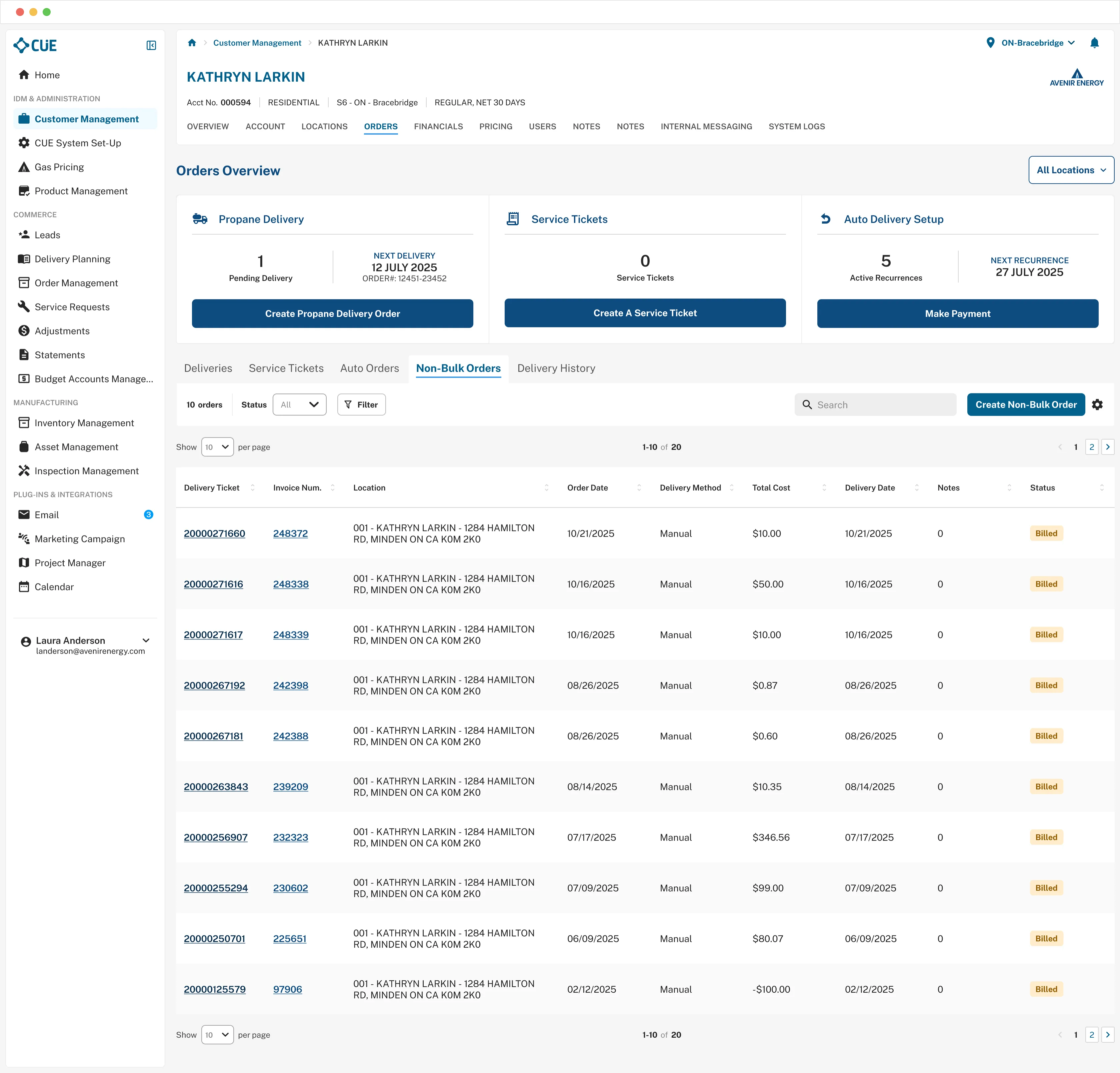
CUE - Avenir Customer Orders Management
No phase-two promises. On December 1, 2024, the following were in production:
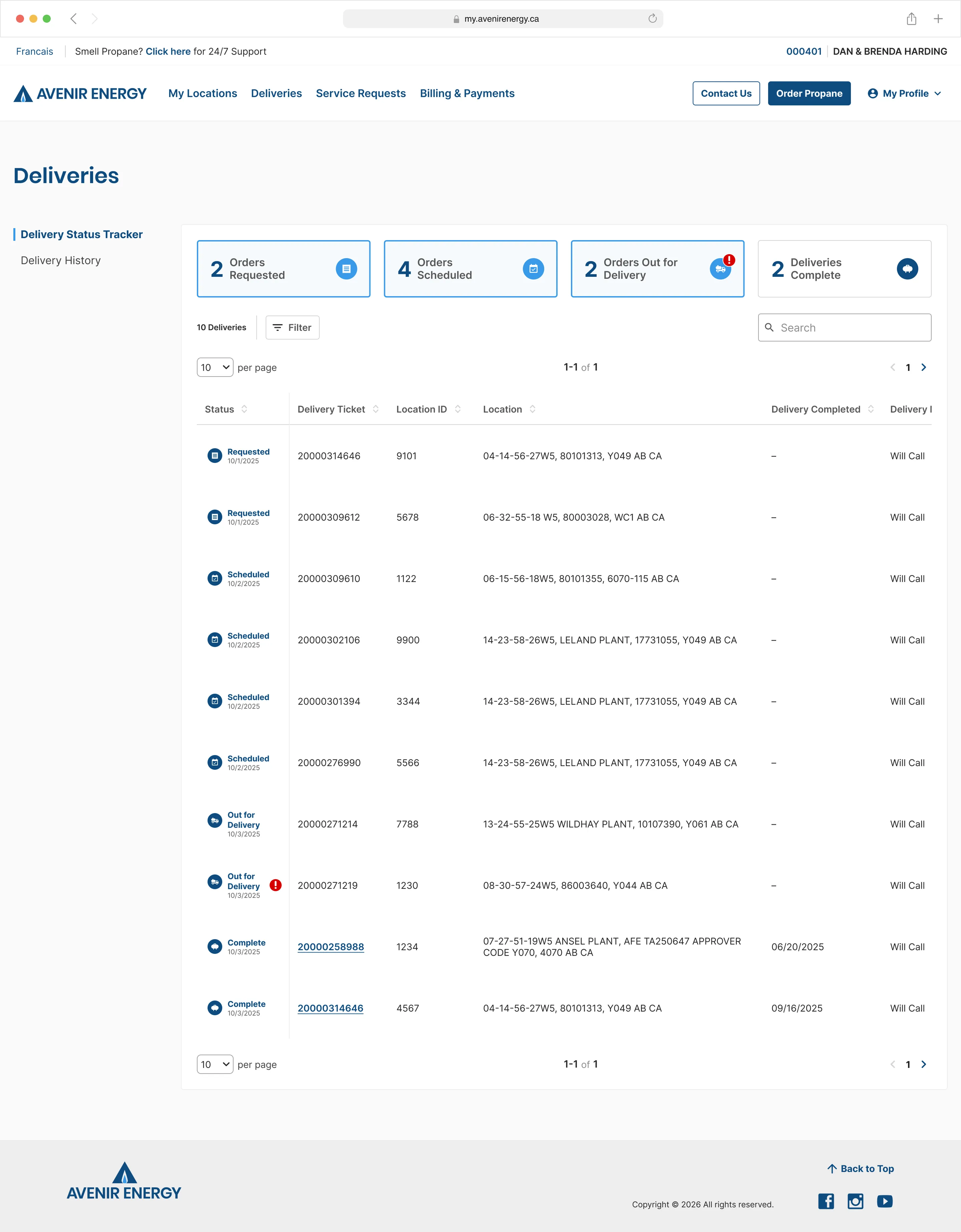
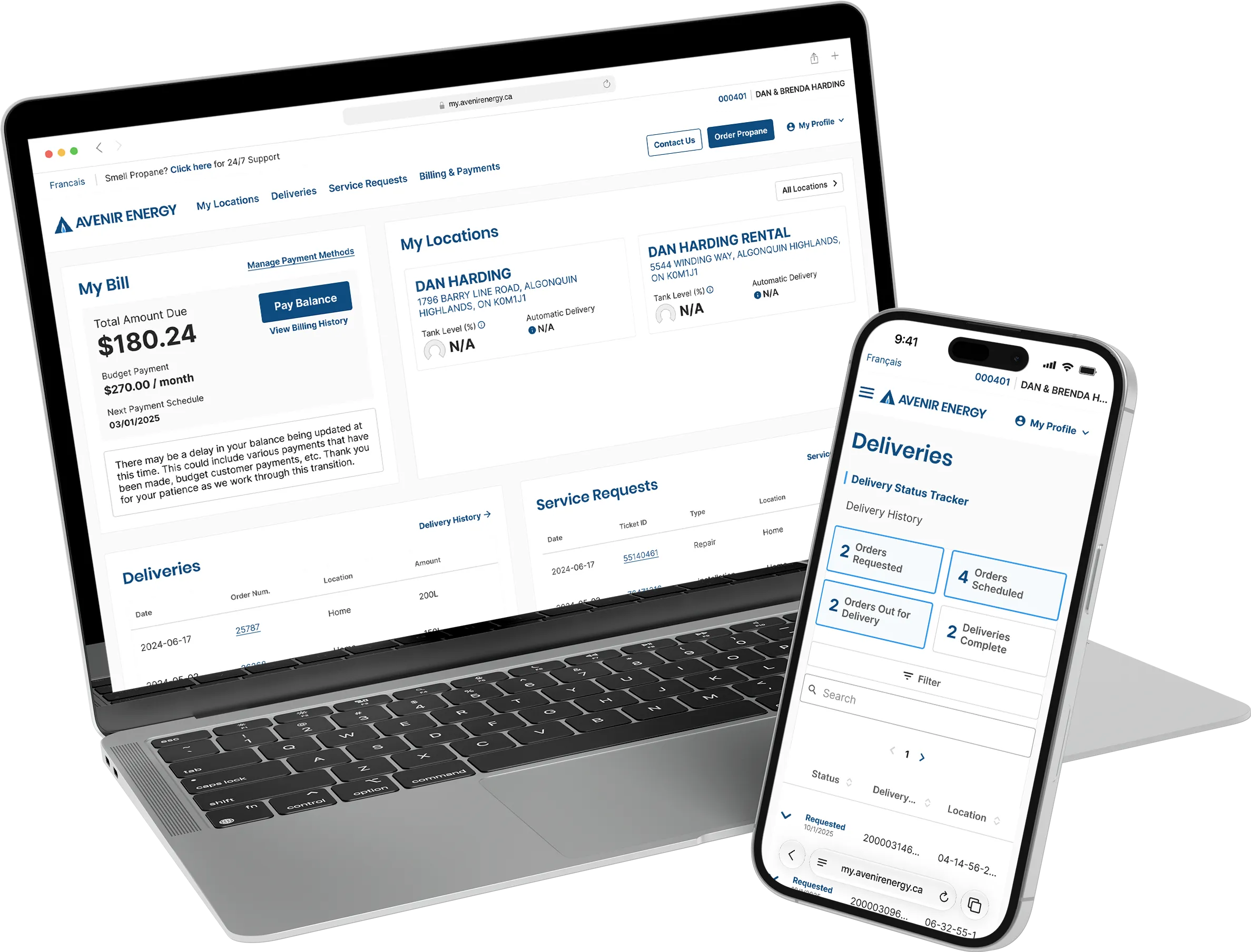
Avenir Customer Portal Deliveries Dashboard
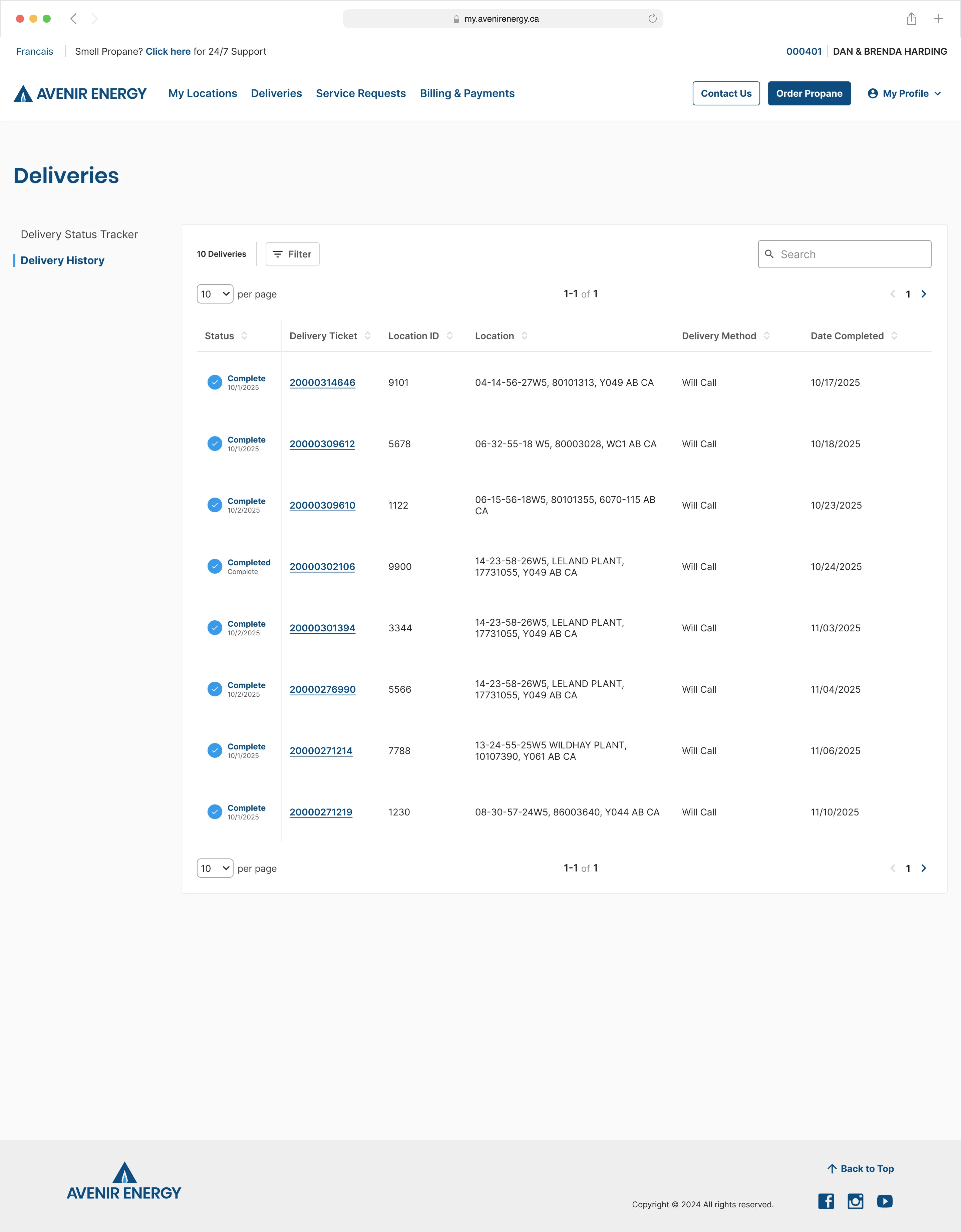
Avenir Customer Portal Delivery History
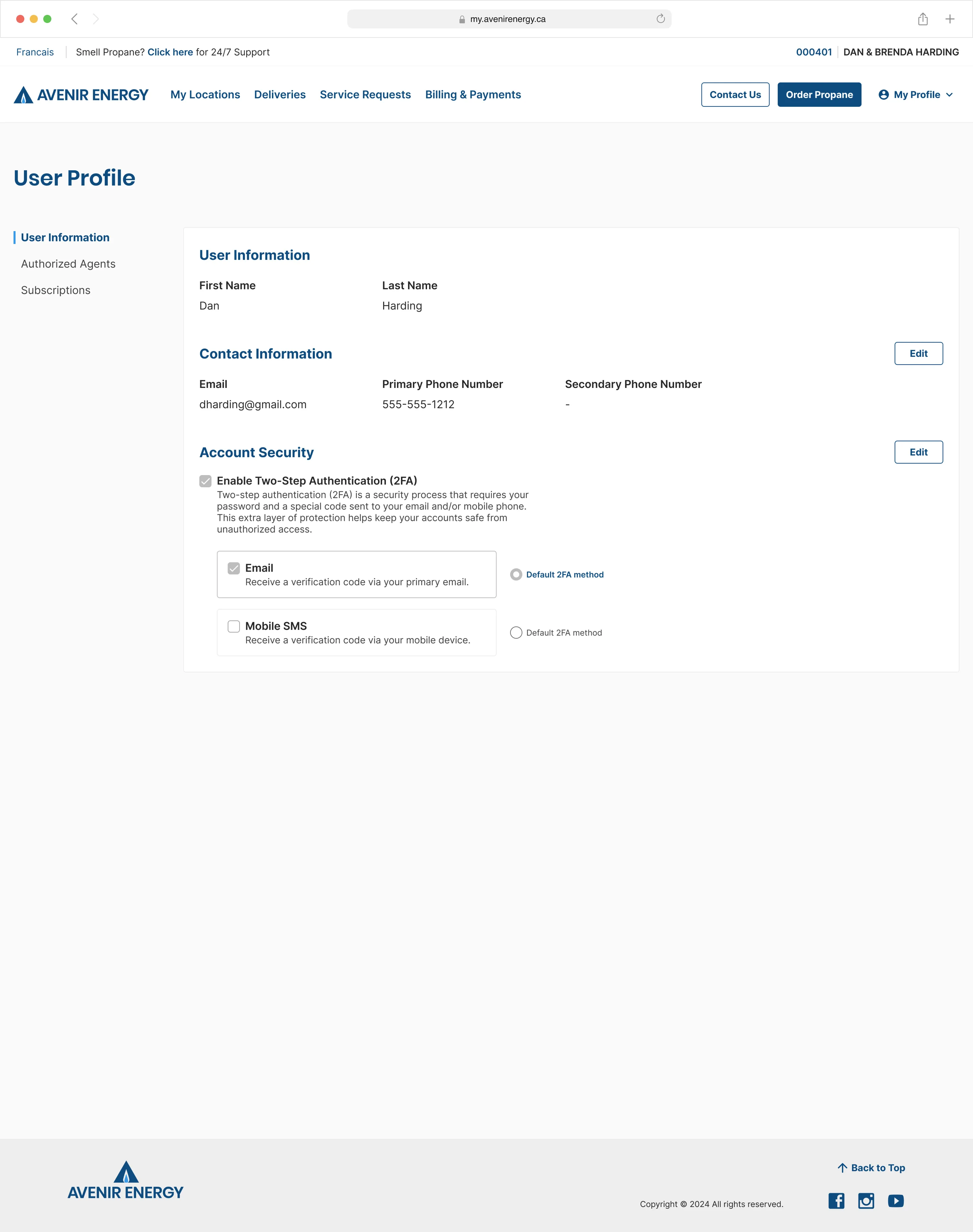
Avenir Customer Portal Account Management
Avenir is not an SAP customer. Avenir is not an Oracle customer. Avenir is running a Business Operating System generated specifically for Avenir and maintained on a runtime shared with other BOS deployments. When a new region is added or a tax rule changes or an integration needs to be replaced, the factory handles the change and CUE ships it without a 12-month release cycle.
AvEx (the Avenir Energy BOS) is one system built on the factory. AiO (Construction) is another. The factory, the CUE runtime, and the BOS output pattern are the same. The operating system changes to fit the business.